 Aastha Enterprises



Induction Sealing Wad: How to Choose the Right One for Your Packaging Line
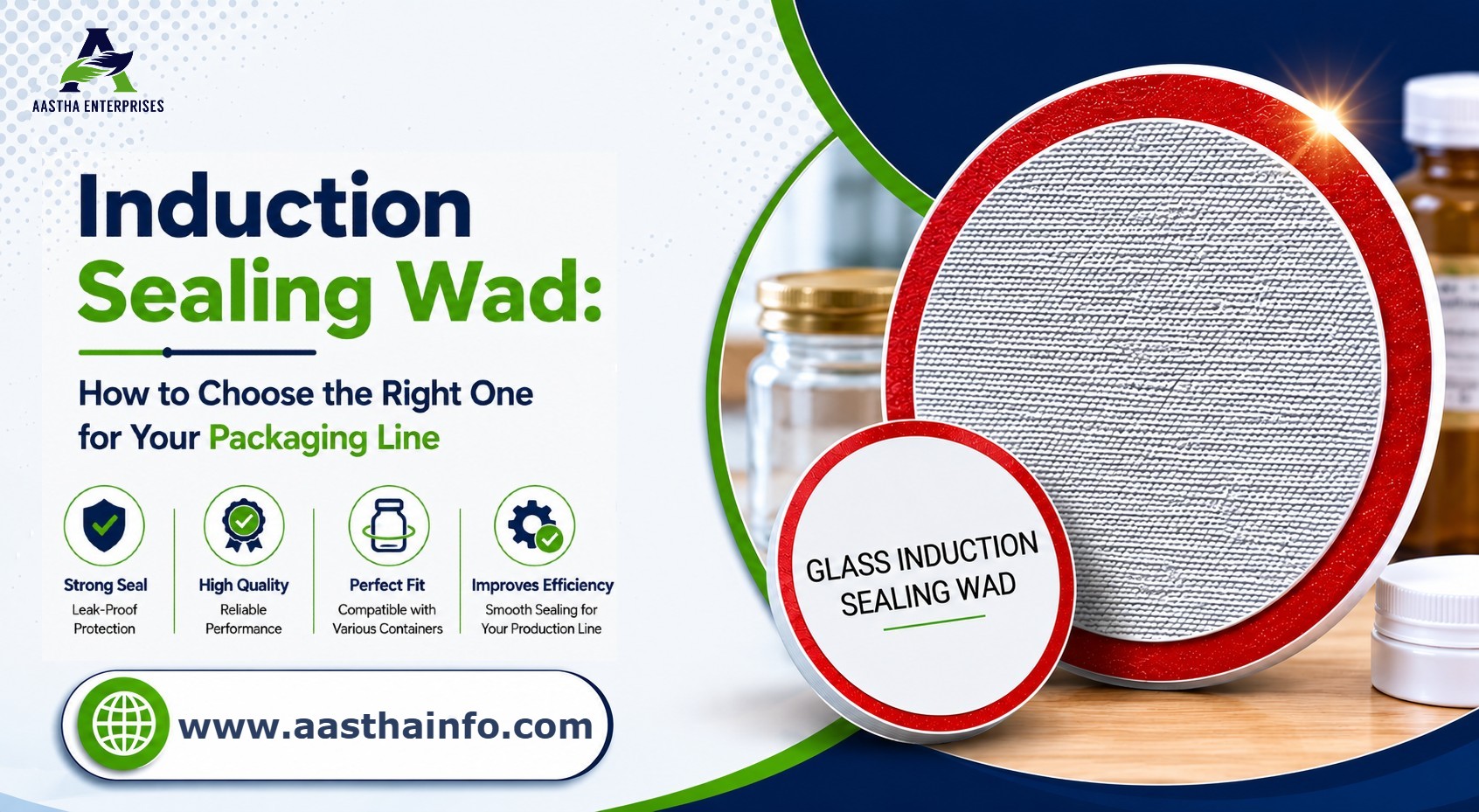
Induction Sealing Wad: How to Choose the Right One for Your Packaging Line
In the contemporary packaging scenario, packaging is no longer limited to simply placing goods inside the container. The demands for packaging systems in all industries are increasing and call for the use of packaging solutions that should be able to secure products from leakage, contamination, moisture, tampering, or any damage during transportation, and at the same time ensure freshness of the product for a longer period. For this reason, induction sealing solutions have become very important in industries such as food industry, pharmaceuticals, cosmetics, chemicals, lubricants, and agro-products. An induction sealing wad is used as an additional seal or coating within the cap of the container and provides the seal by making use of electromagnetic induction heating. Sealing solutions help in ensuring product safety and prevent the problem of leakage in products. The quality of sealing is essential for industries since poor sealing solutions might have a direct impact on shelf life of products, consumer confidence, and production efficiency. Some leading firms in this sector include Aastha which supports packaging industries with efficient sealing and moulding systems for improved packaging performance.
Understanding the Role of Induction Sealing Wads in Packaging Operations
Different industries make use of a range of sealing techniques when it comes to their products and storage conditions. For instance, food products would require moisture-resistant seals, while chemical and pharmaceutical products would demand airtight and contamination-free packaging. Reliable Induction Wad Manufacturers manufacture various sealing solutions that are designed according to the nature of packaging applications. However, it would be better to choose those wads whose effectiveness relies on the quality of container finishes, caps and moulds used to manufacture them. It is essential to note that the sealing effect largely depends on the compatibility of container necks and caps and their finishes with the sealing solution chosen by businesses. This is why packaging companies always try to collaborate with reputable Pet Container Mould Manufacturers.
How Container Compatibility Affects Induction Sealing Performance
Container compatibility is one of the most critical aspects to consider when buying induction sealing wads. High-end sealing wad will fail to create a reliable seal if the neck finishing of the container and its cap are incompatible with its nature. In addition, it is essential to note that the surface must remain uniform and smooth to form effective bonds at the induction process. For this purpose, Container Moulds play a pivotal role because their dimensional precision determines the overall finish quality and neck structure. Poor mould precision will cause non-uniform finishes on containers' necks, leading to leakage issues. For industries that produce packaging in bulk quantity, the mould must be extremely precise because even minor deviations from the norm cause rejection during the automated sealing process. Therefore, industries should collaborate with reputed Pet Container Mould Manufacturers to ensure proper dimensional accuracy in containers' neck finishes. Before choosing any induction sealing wad, one must check whether the chosen sealant is compatible with bottles and caps along with its temperature and manufacturing speed.
Choosing the Right Wad Material Based on Product Requirements
The different types of induction sealing materials are designed for use in different types of products. Different products have varying requirements, storage conditions, and chemical reactions that affect sealing materials differently. Chemical products and pharmaceutical products also require special sealing material options since they contain very reactive compounds. Pressure sensitive products require Vented Induction Wad sealing to allow gas to escape from the containers without exposing them to external contaminants. Industries such as agrochemical, lubricant, and industrial chemicals use Vented Induction wad liners to control the pressure of the gas generated in the packaging system. Businesses can choose appropriate sealing wad liners for products with particular characteristics through reliable induction wad manufacturing companies.
Why EP Wad Liners Are Widely Used in Packaging Industries
EP Wad Liner materials have become very popular in many packaging applications owing to their great sealing capabilities. They not only seal the packages efficiently but also provide cushioning against impact damage while protecting packages against any leaks. Industries such as pharmaceutical products, cosmetics, edible oils, chemicals, and foods utilize the benefits of using these liners to enhance sealing effectiveness. They create good closure systems in packaging and ensure that products do not suffer from any leakage and remain hygienic. The flexibility associated with these liners makes them useful in cases of cap pressure differences as well as variation in container finishing. They become particularly valuable when packaging in fast-moving packaging production lines where there is a need for consistency in closing. High-speed packaging requires reliable sealing components provided by reliable packaging solutions providers.
Important Factors to Evaluate Before Selecting an Induction Sealing Wad
|
Selection Factor |
Why It Matters |
|
Container Compatibility |
Ensures proper seal formation and leakage prevention |
|
Product Type |
Determines suitable sealing material selection |
|
Cap Design |
Affects sealing pressure and wad fitting |
|
Production Speed |
Impacts sealing consistency in automated lines |
|
Storage Conditions |
Influences moisture and temperature resistance |
|
Pressure Management |
Important for chemical and agro-product packaging |
|
Material Quality |
Improves long-term sealing reliability |
Key Takeaways
Induction sealing contributes to enhancing packaging safety, leakage prevention, and extending shelf life.
Compatibility with containers significantly influences effectiveness and efficiency of the process.
Precision-matched Container Mould facilitates precise sealing of packaging containers.
Consistency in packaging is guaranteed through reputable Pet Container Mould Manufacturers.
Strong sealing capability is provided by EP Wad Liners for various packaging industries.
Controlled venting is facilitated by Vented Induction Wad systems.
Expert Induction Wad Manufacturers provide unique solutions to industrial needs.
How Packaging Line Efficiency Depends on the Right Sealing Solution
Present day packaging systems function at high rates where even a minor mistake in the sealing process can cause huge amounts of loss for them. Leakage, contamination, ineffective sealing, and product deterioration can also have their influence on customers' opinions and reputation of their brands. That is why choosing the right kind of induction sealers becomes essential for any packaging operation. An appropriate system for sealing can facilitate consistency in production, lower waste rate, and ensure automation in the packaging process. At present, industries look for packaging companies who are capable of ensuring complete compatibility among their molds, sealing systems, caps, and equipment in use. Such packaging companies as Aastha help organizations to get packaged products of higher efficiency.
Why Businesses Are Moving Toward Advanced Sealing Technologies
With continuous changes in the need for packaging, companies are embracing state-of-the-art sealing technologies that provide higher levels of protection, reliability, and extended product life. In today’s world, consumers expect high levels of security, hygiene, and tamper resistance in the packaging of products irrespective of the industry sector, and hence induction sealing is an integral aspect of current-day packaging. Companies that embrace high-quality sealing machinery enjoy minimal losses associated with product damages, increased safety during transportation, and packaging uniformity. The use of advanced sealing technologies plays an important role in ensuring compliance with safety and quality guidelines in packaging by different sectors.
FAQs
What is the use of induction sealing wads?
Induction sealing wads that we make are meant with the airtight and leakage-proof design this means that these can prevent any product contamination, leakage, or tampering.
Why is it essential to consider the container compatibility when inducing seals on the containers?
Container compatibility that we make guarantees that there is accurate sealing results, avoiding any leakage or improper seals in the packaging process.
What are the uses of EP Wad Liners?
The EP Wad Liners are super reliable when it comes to creating an effective seal, cushioning effect, and ensure leakage prevention.
In what situations should we consider using Vented Induction Wad systems?
Vented Induction Wad systems are usually used in situations such as chemical, lubricant, and agro-product packaging.
Why is it important to have precision Container Mould systems in the packaging industry?
The use of precision Container Mould systems is important because they will help ensure accuracy and consistency during sealing processes.
How can Pet Container Mould Manufacturers help packaging industries?
Pet Container Mould Manufacturers can ensure better mold solutions in the packaging industry.
- Induction Sealing Wad Manufacturers for Pharmaceutical & FMCG Packaging
- Induction Sealing Wads: Uses, Benefits & Selection Guide
- Induction Sealing Wad vs. Traditional Cap Liners: What's the Difference?
- Induction Sealing Wad: How to Choose the Right One for Your Packaging Line
- Find Reliable Induction Wad Manufacturers in India for Your Business
For inquiries, detailed product information, or to discuss your specific requirements, feel free to reach out to our dedicated team.


 Plot No 37, Sector 10A, Vasundhara, Ghaziabad -201012, Uttar Pradesh, India
59, Laxmi Nagar, Niwaru Road, Jhotwara, Jaipur- 302012, Rajasthan, India
Plot No 37, Sector 10A, Vasundhara, Ghaziabad -201012, Uttar Pradesh, India
59, Laxmi Nagar, Niwaru Road, Jhotwara, Jaipur- 302012, Rajasthan, India