 Aastha Enterprises



Induction Sealing Wad Manufacturers for Pharmaceutical & FMCG Packaging
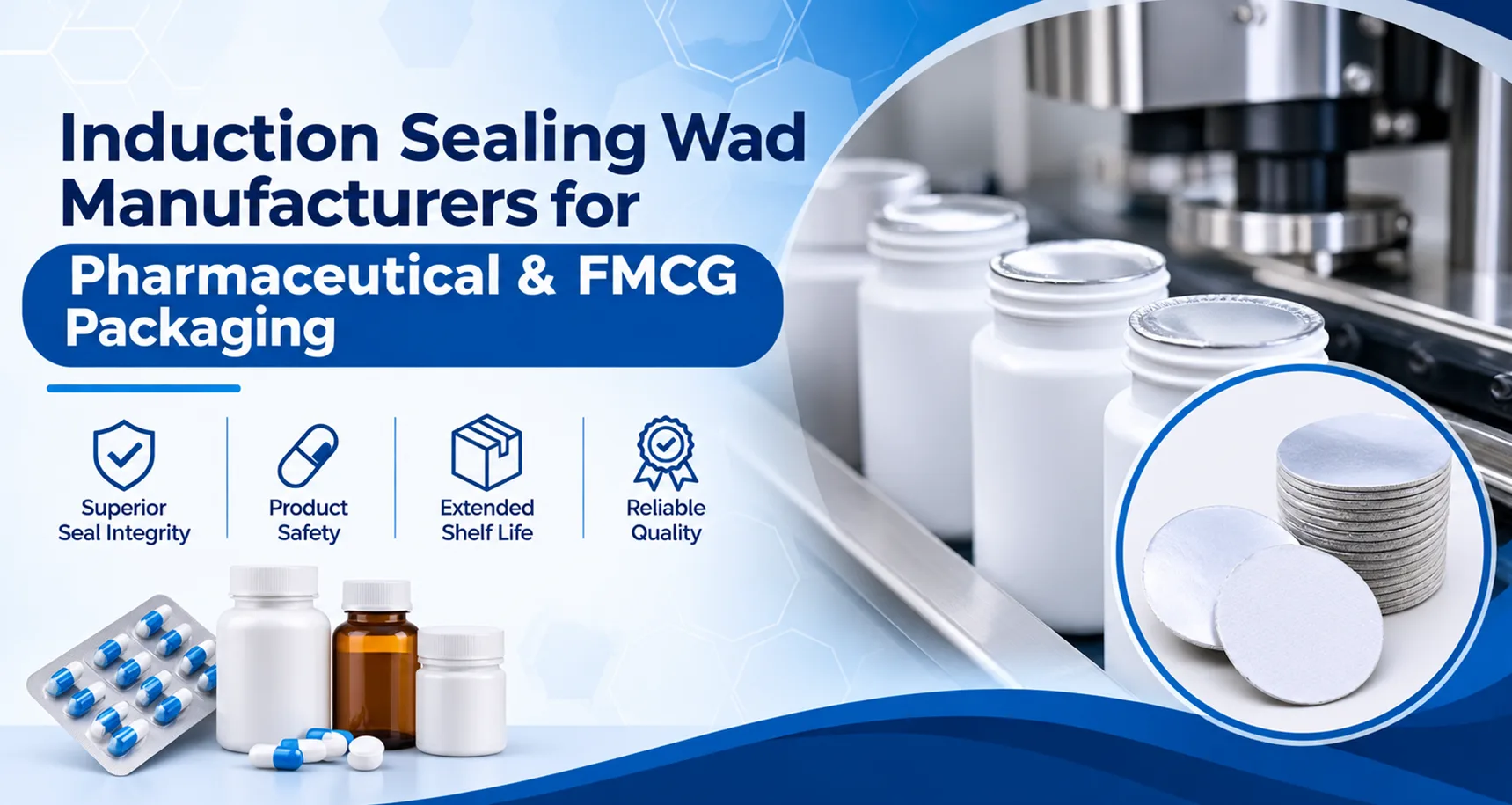
Induction Sealing Wad Manufacturers for Pharmaceutical & FMCG Packaging
The package performs many functions, including holding products. However, in the case of pharmaceutical and FMCG goods, the closure must protect the content as well before delivery to the customers. This can be done with the help of induction sealing wads. They form a sealed layer between the container and the cap, assisting in controlling the closure of bottles and jars.
There are many packaging requirements for various products. For instance, a medicinal bottle will require a good seal before reaching the patient, while a food, cosmetics, or household item will need protection from damage during storage, transportation, and handling in the store. Therefore, choosing appropriate Induction Sealing Wad Manufacturers is an integral part of the packaging process.
How an Induction Sealing Wad Works
The wad is inserted into the compatible cap which is then placed onto the container's mouth. The electromagnetic induction process heats up the aluminum layer in the wad, activating the sealing layer, and creating a seal between the sealing wad and the opening of the container.
When the process is done successfully, the seal forms an inner layer in the closed package. After opening, the customer will be able to see the seal and realize that the closure was opened before.
Thus, the resulting sealing effect is dependent on many factors: container materials, wad structure, machine parameters, cap design and sealing conditions. All these factors should be taken into account simultaneously instead of looking at the wad separately from other packaging materials.
Pharmaceutical Packaging Needs Consistent Sealing
Care should be taken while designing pharmaceutical packaging since the package can contain tablets, capsules, powder, liquid, or any other product which needs protection until its expiry.
In the case of this particular application, the packaging team will have to take into account the following points:
- Compatibility between the wad and bottle
- Strength of the seal
- Heat sealing condition
- Requirement of protection
- Dimensions of cap and bottle
- Storage condition
- Speed of production line
The seal must be compatible with the entire packaging system. It is useless even if the wad looks attractive but seals improperly with the bottle.
FMCG Products Have Their Own Packaging Demands
FMCG packaging consists of a large number of products such as food products, personal care products, cosmetics, home products, and other regularly used products.
The products could pass through various processes before reaching the end consumer, and they could be packed at very high speed, shipped from far distances, and stored in the warehouse, handled multiple times during their journey through retail outlets.
In addition, induction sealing provides one more level of sealing underneath the cap. It will allow the packaging crew to create a more controlled closure as well as allow the consumer to know whether or not the seal inside has been broken.
Aluminium Foil Is a Key Part of the Structure
The aluminum foil is the common heat generating layer in the induction sealing structure. During the induction process, the foil reacts with the magnetic field to produce heat necessary for activating the sealing layer.
Aluminum Foil Induction Sealing Wad Manufacturers produces wads on the basis of this structural design. It should be noted that the thickness of the aluminum foil is not the only parameter influencing the sealing effect; there are other factors, which include the wad construction itself, coating/sealing layer, container material, cap design, and induction parameters.
One of the most important purchasing decisions is compatibility.
A wad designed for one type of container material may not provide the same result with another material. The bottle or jar, cap, liner, and sealing layer must work together.
Packaging manufacturers should provide details such as:
|
Packaging Factor |
Why It Matters |
|
Container material |
Determines sealing compatibility |
|
Neck size |
Must match the wad and cap dimensions |
|
Cap type |
Affects how the wad sits inside the closure |
|
Product type |
May influence the required sealing material |
|
Induction machine |
Determines suitable operating conditions |
|
Production speed |
Can affect exposure and sealing time |
|
Storage conditions |
May influence the required seal performance |
Testing the complete packaging combination before large-scale production can help identify compatibility problems early.
Selecting Wads for High-Speed Production
There can be automated systems for pharmaceutical and FMCG products. Thus, the sealing material should be efficient at the desired pace of production.
An induction wad must ensure the formation of an effective seal, provided that the machine settings are appropriate. However, if there is a narrow process window, any change in the speed, power, container positioning, or cap pressure may influence the process.
For large orders, it is important to discuss the buyer’s machine model, pace of operation, and container details with the supplier of induction sealing wads.
What Packaging Buyers Should Ask Suppliers
When comparing Induction Wad Manufacturers, businesses should not base their decision making solely on the quotation price of the wad. The manufacturer needs to know how the wads will be used and if the wad is right for the particular packaging application.
- Questions that need to be answered include:
- What is the material of the container?
- What is the size of the bottle/jar neck?
- What cap is used?
- Which induction machine do you have?
- How fast does your production line run?
- Is the product liquid, solid, powder or semi-liquid?
- What are the storage conditions of the package?
- What is the type of seal needed?
Aastha Enterprises for Induction Sealing Requirements
Industries that have a need for induction sealing wads can get their products from Aastha Enterprises. The choice of the right wad depends on the container as well as the process that will be used.
The business can also be looked into by companies searching for Induction Sealing Wad Suppliers, and Aluminum Foil Induction Sealing Wads.
For those buying in bulk, discussion about the container, cap, induction machine, and production requirements prior to ordering will help in making an appropriate choice.
Benefits of Choosing the Right Induction Wad
Some of the requirements met by an appropriate induction sealing wad include:
- Closed containment: It makes a protective coating between the bottle and the cap.
- Packaging protection: It is an additional protective layer between the product inside and its surroundings.
- Indication of tampering: A cracked inner seal would mean the package has been previously opened.
- It works well with automation: Appropriate wads can work with the induction sealing machines.
- Consistent packaging: Proper material and process matching will lead to consistent packages.
- Choose us in case you are looking for the best Induction Wad Suppliers.
FAQs
What is an Induction Sealing Wad?
It is a sealing liner, fitted inside the cap, which gets adhered to the opening of the container through the induction process.
What are the advantages of using Induction Wads in pharmaceutical packaging?
An induction wad can create a seal within a compatible pharmaceutical container and can also help in determining the opening of the package.
What is the composition of an Aluminium Foil Induction Sealing Wad?
Its composition may contain aluminium foil along with other layers that help in generating heat and sticking to the container. It depends on the specific application. We are the top Aluminium Foil Induction Sealing Wad Manufacturers.
What should be my criteria while choosing Induction Sealing Wad Manufacturers?
Provide them with the information about the container material, neck diameter, type of cap, product nature, induction machine, and speed of production.
Is it possible to use a single induction wad for all bottles?
No. It depends upon the compatibility of the wad, the container, the cap, and the sealing process. It needs testing before production.
- Induction Sealing Wad Manufacturers for Pharmaceutical & FMCG Packaging
- Induction Sealing Wads: Uses, Benefits & Selection Guide
- Induction Sealing Wad vs. Traditional Cap Liners: What's the Difference?
- Induction Sealing Wad: How to Choose the Right One for Your Packaging Line
- Find Reliable Induction Wad Manufacturers in India for Your Business
For inquiries, detailed product information, or to discuss your specific requirements, feel free to reach out to our dedicated team.


 Plot No 37, Sector 10A, Vasundhara, Ghaziabad -201012, Uttar Pradesh, India
59, Laxmi Nagar, Niwaru Road, Jhotwara, Jaipur- 302012, Rajasthan, India
Plot No 37, Sector 10A, Vasundhara, Ghaziabad -201012, Uttar Pradesh, India
59, Laxmi Nagar, Niwaru Road, Jhotwara, Jaipur- 302012, Rajasthan, India