 Aastha Enterprises



Induction Sealing Wad vs. Traditional Cap Liners: What's the Difference?
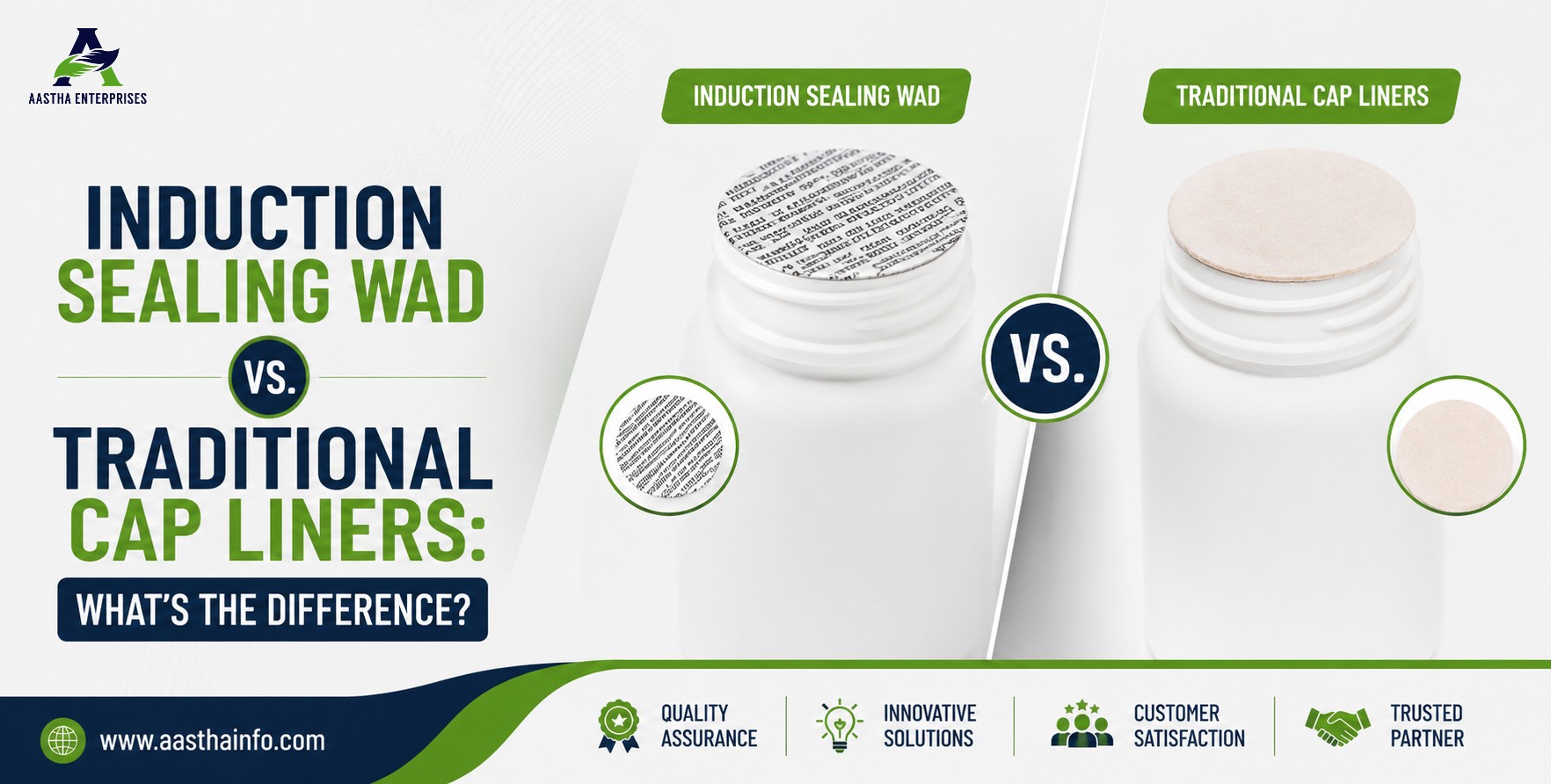
Induction Sealing Wad vs. Traditional Cap Liners: What's the Difference?
Packaging is more than just closing a bottle or container. It involves protection of the product within the package from leaking, contamination, moisture and exposure to environmental conditions. In whatever product you are using such as food products, pharmaceuticals, chemicals, cosmetics, and personal care products, you will require packaging services that protect your product while in storage and during transport. This is where sealing solutions come in handy. Of all the sealing solutions offered today, Induction Sealing Wad have become a common choice for businesses. They are used because of their sealing capabilities.
What Is an Induction Sealing Wad?
Induction Sealing Wad is a special kind of sealing tool that goes inside the closure in order to provide sealing of the product. With the use of induction sealing machines, the wad forms an airtight seal in the bottle's opening thus preventing any form of leaking from occurring.
How Do Traditional Cap Liners Work?
Cap liners are usually installed inside closures. They serve mainly as a lining material for cushioning purposes between the cap and the bottle. The main advantage of cap liners is to prevent leakage in addition to ensuring that the cap fits correctly. Unlike Induction Wad, liners are not able to create a complete seal of the product in the bottles' opening.
Why Are More Industries Switching to Induction Sealing Technology?
Product integrity is important for manufacturers. A seal that is formed through Induction Sealing technology offers some level of protection in terms of freshness preservation, prolonging shelf life and minimizing tampering. All these benefits make induction sealing an attractive option among many others.
What Is the Main Difference Between an Induction Wad and a Traditional Liner?
What really makes them different is the nature of seal. Traditional liner sits inside the closure but does not offer much besides basic protection when the cap is tightened. On the other hand, Induction Sealing Wad bonds directly with the opening surface. This is because of the nature of the process, hence forming an airtight seal that will be opened intentionally.
Which Option Offers Better Leak Protection?
However, there are some significant challenges that manufacturers, wholesalers, retailers, and consumers are faced with regarding leakage. In case the packaging leaks, the contents may be harmed as a result of being transported or stored somewhere for some time. Induction seals will help prevent such problems because the seal will cover the entire surface of the container opening.
How Does Product Freshness Benefit from Induction Sealing?
The problem related to air, moisture, and even some other elements from the surrounding environment getting inside the product is also critical because the majority of products spoil in case they get access to something else except for their natural surroundings. The proper application of the Sealing Wad will guarantee better protection for the item.
Where Are Induction Sealing Wads Commonly Used?
Common Applications Include:
- Food and beverage packaging
- Pharmaceutical containers
- Cosmetic products
- Personal care products
- Agricultural chemicals
- Industrial chemicals
- Nutritional supplements
These industries often require packaging solutions that protect products throughout their entire distribution cycle.
How Does Tamper Evidence Improve Consumer Confidence?
Customers need guarantees that the product they are going to buy will stay unchanged until they decide to try it out themselves. In case of any alteration done with the package by someone else, an induction seal will give people an understanding of what happened to the container. There is no possibility of restoring the seal after it has been torn apart.
Are Traditional Cap Liners Still Useful?
There are still a lot of occasions when conventional liner sealing proves to work perfectly well. For instance, this gets you the benefit of cushioning effect, helps with closing operation, and ensures some degree of leak resistance. However, there are situations when an induction seal is preferred because of its reliability.
Comparing Induction Sealing Wads and Traditional Cap Liners
|
Feature |
Induction Sealing Wad |
Traditional Cap Liner |
|
Tamper Evidence |
Excellent |
Limited |
|
Leak Protection |
High |
Moderate |
|
Product Freshness |
Better Protection |
Basic Protection |
|
Shelf Life Support |
Strong |
Limited |
|
Contamination Control |
High |
Moderate |
|
Consumer Confidence |
Higher |
Standard |
|
Seal Strength |
Strong Bond |
Closure Dependent |
Why Is Consistency Important in Packaging Operations?
Manufacturers have to develop packaging solutions which will perform uniformly when mass produced. Packaging solutions that guarantee reliable sealing will reduce the amount of product returns, wastage, and increase consumer satisfaction. The use of a quality Wad will ensure that your packages perform reliably.
How Do Induction Sealing Wad Suppliers Support Modern Packaging Needs?
For the purpose of improving packaging solutions, industries have to look for suppliers who understand packaging standards. Induction Sealing Wad Suppliers who have experience in dealing with packaging needs of businesses will advise them on how to find the most appropriate induction sealing solutions. They will contribute towards effective packaging.
What Should Businesses Consider When Choosing a Sealing Solution?
When choosing the best solution, businesses have to consider different factors like the type of product being packaged, the packaging standards, product safety, shelf life, transport and storage. After considering such factors, businesses will be able to select appropriate packaging solutions.
Why Is Induction Sealing Becoming the Preferred Choice?
The current standards of packaging solutions call for packaging techniques that not only protect the products, but also enhance their reliability and security. For this reason, the need to seal them has become inevitable. Induction sealing ensures that packaged products are safe from tampering.
How Does Aastha Support Packaging Excellence?
Aastha is an organization that offers reliable packaging solutions. Through its Induction Sealing Wads, Induction Wads, Sealing Wads, and experienced Induction Sealing Wad Suppliers, Aastha provides quality packaging solutions to customers.
Key Takeaways
- The Induction Sealing Wad forms an effective seal right from the bottle mouth.
- Effective Induction Sealing Wad Suppliers help companies select the right packaging.
- Aastha provides sealing solutions as per packaging requirements.
- Purpose of cap liners is just that they offer minimum protection and padding.
- Induction Sealing is suitable in case of preventing leakage.
- Tamper proofing gives assurance to customers.
- Sealing wads preserve products integrity.
- A majority of the firms prefer induction sealing because of safety.
FAQs
What is Induction Sealing Wad?
It is a sealing mechanism used in closing a container mouth through induction sealing.
What makes an induction wad different from a cap liner?
While the induction sealing wad sticks to the mouth of the bottle or container, cap liner stays inside the cap.
Why is induction sealing popular in packing goods?
Through induction sealing, not only leakage is prevented, but also the safety and security of the product can be guaranteed.
Does induction sealing affect the shelf life of any product?
Yes, it does. It prevents the exposure of the product to air, hence increases its shelf life.
Which industries use sealing wads on a widespread basis?
Industries like food processing, pharmaceuticals, cosmetics, chemicals, and personal care products use them quite extensively.
How can Aastha help your packaging firm?
With Aastha by your side you can have the best and the top-quality sealing materials.
- What Are the Benefits of Choosing Reliable Monobloc Pump Manufacturers?
- Induction Sealing Wad vs. Traditional Cap Liners: What's the Difference?
- Induction Sealing Wad: How to Choose the Right One for Your Packaging Line
- Find Reliable Induction Wad Manufacturers in India for Your Business
- How to Choose the Best PET Container Mould Manufacturer in India?
For inquiries, detailed product information, or to discuss your specific requirements, feel free to reach out to our dedicated team.


 Plot No 37, Sector 10A, Vasundhara, Ghaziabad -201012, Uttar Pradesh, India
59, Laxmi Nagar, Niwaru Road, Jhotwara, Jaipur- 302012, Rajasthan, India
Plot No 37, Sector 10A, Vasundhara, Ghaziabad -201012, Uttar Pradesh, India
59, Laxmi Nagar, Niwaru Road, Jhotwara, Jaipur- 302012, Rajasthan, India